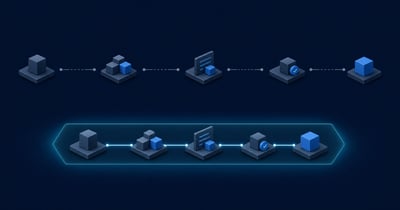
Why global hiring breaks
When a company hires locally, weak process can hide for a while. A hiring manager can clarify expectations informally. Recruiters can adjust based on office context. Onboarding gaps can be solved by proximity, repetition, or quick escalation. But global hiring removes that cushion.
Once a company starts hiring across markets, every unclear part of the process becomes more expensive.
Role expectations drift. Hiring managers evaluate candidates through different standards. Recruiters send profiles that technically match the job description but miss the real bar. Feedback slows down. Candidates lose confidence. Teams blame the market.
However, the market is not always the problem. The system is underdesigned.
For engineering leaders, this creates a direct business issue: hiring stops being a growth lever and becomes a drag on roadmap velocity. Open senior roles age for weeks or months. Engineering managers spend more time interviewing than shipping. New hires take longer to ramp because the operating model was not ready for them.
That is why global hiring needs to be designed like an operating model, not treated like an expanded recruiting funnel.
The global hiring operating model
A strong global hiring model needs more than a sourcing plan. Based on the Hacking Borders conversation with Tracy St. Dic and CodersLink’s Mexico Expansion lens, this article breaks the operating model into seven layers.
These layers are not presented as a direct framework from Tracy or Zapier. They are an editorial framework built from the themes surfaced in the episode: market focus, role calibration, ownership, screening, overlap, onboarding support, and feedback cadence.
1. Market focus
Global hiring does not mean hiring everywhere. The first decision is not which market has the largest number of engineers, it should bewhich market the company can actually support.
As Tracy put it in the episode: "We could do anything, but that doesn't mean we should do everything."
Talent density matters, so do time-zone overlap, compensation expectations, language fluency, legal structure, manager readiness, onboarding capacity, and long-term team integration.
For US engineering teams, Mexico often becomes a strong market because it combines senior engineering depth with real-time collaboration and operational proximity. But even the right market fails without a clear operating model behind it.
The question is not just: Where is the talent?
The better question is: Where can this team build a repeatable hiring and delivery system?
2. Role calibration
Before sourcing begins, the company needs to define what "senior" means in the target market. This is where many global hiring motions break.
A recruiter may be sourcing for years of experience. A hiring manager may be evaluating system design depth. A technical interviewer may be looking for production ownership. A finance stakeholder may be benchmarking compensation against the wrong market.
The result is a process where everyone uses the same title but applies a different standard.
This is why Tracy’s point matters: "Distributing hiring forces you to make everything very explicit."
-
Role calibration should define:
-
Required technical depth
-
Expected ownership level
-
Communication requirements
-
Time-zone and collaboration needs
-
Compensation range
-
Interview loop design
-
Ramp expectations
-
What a strong first 30, 60, and 90 days look like
Without this layer, global hiring becomes global guessing.
3. Recruiters cannot own global hiring alone
Global hiring speed depends less on recruiters working faster and more on the organization of cross-functional decisions earlier.
Recruiters can run sourcing, manage process, coordinate interviews, and maintain candidate experience. But the operating model also requires Engineering, People, Finance, Legal, IT, and other operational stakeholders to make decisions before the process reaches a bottleneck.
Engineering owns the bar. People owns process and compliance. Finance owns compensation logic. Legal owns employment model and risk. IT and operational stakeholders support systems, access, and enablement. Hiring managers own team integration.
When ownership is unclear, decisions slow down at exactly the moments when speed matters most.
The companies that scale global hiring will do not wait until a candidate reaches offer stage to involve the right stakeholders. They define ownership upfront.
4. Screening standards
The hiring bar has to be consistent, but it cannot be blindly copy-pasted.
Strong global hiring teams define the standard before candidates enter the process. They know what must be universal and what must be adapted to market context.
For engineering roles, the standard should include technical depth, production experience, communication ability, architecture judgment, AI-augmented workflow fluency, and measurable impact.
At CodersLink, that thinking is reflected in the Top 1% Standard: a framework for evaluating engineers against a Silicon Valley bar across technical capability, AI-augmented workflows, quality standards, communication, and real shipped outcomes.
The point is not to add more interview steps. The point is to reduce ambiguity before the candidate reaches the hiring manager.
5. Time-zone and overlap rules
Time-zone overlap is not a scheduling detail. It affects standups, code reviews, incident response, onboarding, manager access, sprint planning, and whether the new hire becomes part of the team or stays at the edge of it.
Many companies underestimate this layer because they think distributed work is only about remote collaboration tools. But tools do not solve rhythm. Engineering teams need clear rules for:
-
Core overlap hours
-
Expected meeting windows
-
Async documentation
-
Code review turnaround
-
Manager availability
-
Incident escalation
-
Onboarding touchpoints
-
Team rituals
Nearshore hiring works best when overlap is designed into the team’s operating cadence, not negotiated after the hire starts.
6. Onboarding and manager enablement
A strong global hire still needs a clear system around them.
This does not have to become an overbuilt onboarding program. But when companies hire across borders, managers need enough structure to help new engineers understand the codebase, the review culture, the communication norms, and how decisions get made.
At minimum, teams should define:
The point is simple: if the manager is not prepared to support a distributed hire, the company may misread an operating problem as a talent problem.
7. Feedback cadence
Global hiring improves only when the team learns from every loop.
-
Which markets are producing strong candidates?
-
Where are candidates dropping?
-
Which hiring managers are slow to provide feedback?
-
Which interview steps are filtering for the wrong signal?
-
Where is compensation misaligned?
-
Which new hires ramp fastest?
-
Which profiles turn into strong contributors after 90 days?
Without feedback cadence, the team repeats the same mistakes across markets. With feedback cadence, the hiring system gets sharper over time.
This is the difference between a recruiting campaign and an operating model.
What this means for engineering leaders
For engineering leaders, the lesson is direct: if the team is already struggling with unclear role definitions, inconsistent interview feedback, or slow onboarding, global hiring will not fix the problem. It will expose it.
That does not mean companies should avoid global hiring. It means they should treat it with the same discipline they apply to engineering execution.
The right model can unlock senior capacity, reduce roadmap drag, and give engineering managers access to talent they could not reach locally. But the model has to be designed.
Where Mexico fits into the model
For CodersLink, this is where the Mexico Expansion lens comes in. Mexico is not just a cost alternative for US engineering teams. It can be a strategic capacity market when the operating model is built correctly. The strongest use cases are not "hire cheaper engineers." They are:
-
Building a US-aligned engineering team with real-time overlap
-
Expanding capacity when local senior hiring is too slow
-
Creating a dedicated Mexico engineering hub
-
Supporting teams that have outgrown one-off staffing
-
Adding recruiting capacity when internal TA cannot keep up with volume
-
Improving predictability across hiring, onboarding, and retention
This is where CodersLink fits the Mexico Expansion conversation.
CodersLink is a Mexico-specialized Engineering Capacity Partner for US engineering teams. The model can start with Staff Aug, expand into MESHubs, or support volume hiring through Nearshore RPO under the same standard, same partner, and same operating discipline.
The goal is not to send more resumes. The goal is to help companies build senior engineering capacity in Mexico with the structure to make it work.
A practical checklist for global hiring
Before expanding global engineering hiring, leaders should answer these questions:
1. Which market are we choosing, and why?
2. What does "senior" mean for this role in this market?
3. Who owns the hiring decision at each stage?
4. What screening standard will protect quality?
5. What overlap hours does the team actually need?
6. How will the manager support this engineer in the first 30 days?
7. What feedback cadence will help us improve the system?
8. How will compensation be benchmarked?
9. What employment model fits the role and risk profile?
10. What does success look like after 30, 60, and 90 days?
If those questions are unanswered, the hiring problem is probably not just sourcing. It is the operating model.
Planning global engineering hiring in Mexico?
CodersLink helps US companies build senior engineering capacity in Mexico through a partner model designed for every stage of growth: Staff Aug to start, MESHubs to scale, and Nearshore RPO to hire at volume.
Build your Mexico engineering capacity plan.