
Nearshore Hiring
Is Nearshoring to Mexico Worth It for US Companies? A Decision Framework
Oct 01, 2026
•
13 min read

In a nutshell
- Nearshoring to Mexico makes the most sense when it solves a specific engineering constraint: talent access, hiring speed, compensation pressure, capacity, or collaboration.
- Salary is only one part of the business case. Time to capacity, recruiting effort, manager load, onboarding, and the cost of leaving important roles open also shape the economics.
- Mexico has a substantial technology ecosystem, but it is not one interchangeable talent pool. Role, seniority, specialization, English requirements, and compensation determine how much of the market is actually relevant.
- Working-hour overlap matters most when the work requires same-day decisions. Product development, architecture, code review, onboarding, and incidents place more value on proximity than highly separable work.
- The decision should start with the constraint, not the country. A new geography will not fix an unclear role, an unrealistic candidate profile, or a team that cannot absorb more engineers.
A US engineering team can spend months trying to fill the same senior role, raise the compensation band, widen the sourcing funnel, and still end up with roughly the same problem: the available market is not producing enough candidates who match what the team needs.
That is usually the point when Mexico enters the conversation. Not because every company suddenly wants a nearshore strategy, but because expanding the hiring market can change several constraints at once. It can open access to a different engineering workforce and compensation structure while keeping new engineers close enough to the US workday to participate in the product and technical conversations that shape the work.
Whether that makes Mexico “worth it” depends on what was limiting the team in the first place. A company struggling with local talent availability is making a different decision from one trying to control engineering costs, reduce coordination friction, or add capacity faster. Mexico can address some of those problems very well, but only when the role, operating model, and economics line up.
What does “worth it” actually mean?
The easiest nearshore calculation is also one of the least complete: compare a US salary with a Mexican salary and measure the difference.
Compensation belongs in the analysis. It just cannot carry the entire argument.
A more realistic engineering-capacity comparison includes:
- Role-specific compensation, rather than one national average.
- Time to fill, especially when important positions have already been open for months.
- Recruiting effort, including sourcing, interviews, and repeated search cycles.
- Manager load during both hiring and ramp-up.
- Onboarding time before a new engineer becomes independently productive.
- Collaboration requirements, such as product clarification, code review, architecture, and incident response.
- Employment or engagement costs, depending on how the company accesses the talent.
- The cost of leaving the capability unfilled, even when that cost cannot be expressed as one precise ROI figure.
The current online edition of CodersLink's Mexico Tech Salaries Report 2026 uses 10,246 verified respondents across 36 roles and all 32 Mexican states. More importantly for an employer, the data can be segmented by role, seniority, English proficiency, employer origin, work location, and other variables rather than treating Mexico as one salary market.
That distinction matters because a company looking for a senior English-speaking engineer who will work closely with a US product team is not shopping at a national median. The relevant compensation market has already narrowed.
The more useful comparison is the cost of reaching productive engineering capacity. Salary is one component. Recruiting time, onboarding, management effort, collaboration, and the consequences of waiting belong beside it.
Mexico has a real engineering market, but not one universal talent pool
Mexico has enough technology activity to justify serious evaluation as an engineering market. The difficulty is translating national scale into the part of the market a specific company can actually use.
Several signals help establish the size and depth of the ecosystem:
| Market signal | Latest figure used here | What it actually measures |
|---|---|---|
| Software developers, analysts, and multimedia professionals | ~390,000 | Employed workers in the official occupational category, Q1 2026 |
| Professional higher-education ICT enrollment | 318,021 | Students in ICT programs during the 2024–2025 academic year |
| Computer systems design and related-services establishments | 3,058 | Registered economic units in the industry, May 2026 |
| Mexico IT market | US$20.4B | Estimated total IT market value for 2025 |
| Bachelor's graduates in STEM | 26% | Share reported for Mexico in OECD's 2025 country note |
The first three figures come from different official Mexican datasets and should not be added together as though they were one giant candidate pool. The roughly 390,000 figure measures people employed in an official occupation; 318,021 measures students in higher-education ICT programs; and 3,058 refers to establishments operating in computer systems design and related services. CodersLink's Mexico Tech Talent Ecosystem article uses them precisely as separate indicators of workforce, pipeline, and business activity.
The broader economic signal points in the same direction. The U.S. International Trade Administration's February 2026 country guide describes Mexico as one of Latin America's more dynamic IT and telecom markets and cites an estimated US$20.4 billion IT market for 2025, including US$11.9 billion in IT services. OECD's 2025 Mexico country note also reported that 26% of bachelor's graduates were in STEM fields, compared with 23% across the OECD in that edition.
Those figures establish that Mexico is not a hypothetical sourcing market. They do not tell an employer how many Staff engineers, AI specialists, SREs, or senior backend developers are ready to accept a particular job.
A national market of hundreds of thousands becomes much smaller once the requisition adds:
- a specific technical specialization,
- Staff+ seniority,
- advanced English,
- particular industry experience,
- location constraints,
- a compensation ceiling,
- or several of those requirements simultaneously.
A better way to evaluate Mexico is to start with the capability the team needs, not with the size of the market.
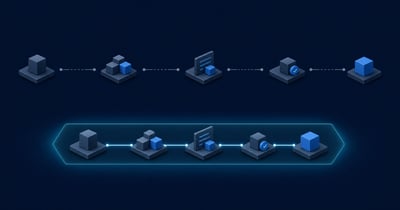
Capability → role definition → relevant talent pool → compensation → collaboration needs → hiring model
Each step narrows the market to the people who could realistically fit the role. Mexico expands the search, but the company’s requirements determine how much of that market is actually usable.
Where Mexico can improve the operating equation
Talent supply explains only part of Mexico's relevance for US companies. Nearshoring creates more value when proximity solves a real operating constraint.
That same idea came up in Hacking Borders with Tracy St. Dic: access to talent only creates value when the operating model can support it. For distributed engineering teams, that means looking beyond where the talent sits and asking how quickly people can exchange context, make decisions, and work through blockers once they are part of the team.
Some engineering work travels well across time zones when requirements are stable and interfaces are clear. Other work depends on frequent interaction: product clarification, code review, architecture decisions, and fast unblockers where shared working hours can materially reduce delay.
For that kind of work, the value of proximity is less about meetings and more about how long context has to wait.
Shared working hours can be particularly useful for:
- Product clarification while requirements are still changing.
- Code review where feedback needs to arrive while work is active.
- Architecture decisions involving multiple engineering owners.
- Sprint planning and technical discussions that depend on changing context.
- Onboarding, when new engineers need regular access to managers and peers.
- Incident response and production issues where another working cycle can materially increase delay.
- Cross-functional work among engineering, product, design, and business stakeholders.
CodersLink's existing analysis of time-zone alignment makes the same distinction: asynchronous work remains valuable for focus, documentation, and ownership, while shared hours protect workflows that benefit from live context or same-day decisions.
Mexico's advantage is therefore not simply that it is geographically close to the United States. The advantage appears when that proximity allows a company to add engineers without redesigning its entire working day around the location of the new capacity.
There is an important limit to that argument. If Mexico-based engineers are handed tickets but excluded from product discussions, architecture decisions, sprint rituals, or normal manager access, the organization may be paying for proximity without using much of it.
Match Mexico to the constraint
The cleanest way to evaluate the country is to start with the bottleneck already visible inside the engineering organization.
| Current constraint | How Mexico may help | What still has to be true |
|---|---|---|
| Local recruiting is taking too long | Expands the geography available to the search | The role and hiring bar are clearly calibrated |
| The current compensation model is difficult to scale | Gives the company access to a different compensation market | The comparison uses role-specific, fully loaded economics |
| Engineers need frequent access to US teams | Working-hour overlap can support same-day collaboration | Engineers actually participate in those workflows |
| A difficult role produces too few candidates | A broader market can expand the viable funnel | Requirements distinguish essential capabilities from preferred background |
| Async coordination is consuming manager time | Greater overlap can reduce some handoff friction | The engagement does not add another layer of unnecessary process |
| Roadmap demand exceeds available engineering capacity | Mexico creates another path to adding engineers | Managers have enough capacity to onboard and integrate them |
This also explains why changing geography sometimes fails to repair a search.
Imagine a company wants a senior engineer with one exact stack, several years in a specific industry, experience at a particular type of company, advanced English, one preferred location, a narrow compensation range, and half a dozen technologies listed as mandatory. Moving that requisition from the United States to Mexico makes the map bigger; it does not make the intersection of those requirements large.
Before concluding that the market is weak, employers can separate:
- Capabilities the engineer genuinely needs on day one
- Capabilities that can reasonably be learned
- Experience that provides evidence of those capabilities
- Requirements that mainly act as proxies for them
That exercise can widen the search without lowering the technical bar. It also produces a much more useful picture of whether Mexico has the talent the company actually needs.
When nearshoring to Mexico may not be worth it
Mexico is not the right answer to every engineering capacity problem. The business case weakens when the advantages of proximity, talent access, or compensation do not materially improve the way the team needs to operate.
Nearshoring to Mexico may be a weaker fit when:
- The work is highly separable and asynchronous. Stable requirements, strong documentation, and limited interaction with the core team reduce the value of working-hour overlap.
- Another market has materially stronger supply for the specialization required. Mexico has a substantial engineering ecosystem, but no country has the deepest talent market for every technical niche.
- The lowest nominal cost is the main decision variable. If the work tolerates significant time-zone separation and limited real-time collaboration, other markets may deserve more consideration.
- Managers do not have enough capacity to onboard and support additional engineers. A new geography can expand the hiring funnel without solving a shortage of feedback, context, or technical leadership.
- Legal, security, customer, or contractual requirements limit where the work can happen. Those constraints should shape the market decision before recruiting begins.
- The company expects geography to fix an unclear requisition or operating model. Moving the search to Mexico does not resolve weak role definition, unclear ownership, poor onboarding, or unrealistic hiring criteria.
The point is not that Mexico needs to win every comparison. It needs to improve the specific constraint the company is trying to solve. If proximity, talent access, or the economics do not create a meaningful advantage for that work, another market or delivery model may be a better fit.
Mexico and nearshore vs offshore are two different decisions
Two questions often get folded into one: Should we nearshore rather than offshore? Should we build engineering capacity in Mexico?
The first question is about how the work needs to move. CodersLink's Nearshore vs Offshore framework compares shared hours, communication cadence, cost, manager load, and the amount of ambiguity or collaboration the work can tolerate.
The Mexico question starts one level later. Once the company knows that nearshore conditions are useful, it still needs to establish whether Mexico offers the right combination of:
- technical capability,
- seniority,
- compensation,
- working-hour overlap,
- and access model.
The distinction becomes especially clear inside startups. A new product initiative still shaped by customer feedback may need continuous access to changing context, while a mature migration with stable ownership may distribute much more easily. CodersLink's workstream framework makes that distinction rather than forcing the entire engineering organization into one delivery model.
The same company can therefore reach different answers for different parts of its roadmap. Mexico does not have to be a company-wide philosophy. It can be a role, team, or workstream decision.
A five-question Mexico nearshore test
Before opening a search, engineering leaders should be able to answer five questions.
1. What constraint are we trying to remove?
Talent scarcity, hiring speed, compensation pressure, specialized capability, collaboration, and general capacity are different problems. If the organization cannot name the constraint, it will struggle to measure whether a new market fixed it.
2. Does the work gain meaningful value from shared working hours?
Look at the workflow rather than the sourcing label. Product decisions, code reviews, architecture, incidents, onboarding, and frequent manager access place more value on overlap than work with mature interfaces and stable requirements.
3. Have we defined the capability or an imaginary candidate biography?
A long list of attributes is not the same thing as a hiring bar. Teams should know which skills are essential, which can be learned, and which requirements are merely signals they have historically associated with strong candidates.
4. Can our managers integrate the capacity we add?
New engineers consume some capacity before they create their full capacity. They need access, context, feedback, code review, and technical direction. A company that ignores manager bandwidth can move the bottleneck from recruiting into delivery.
5. Do the fully loaded economics still work?
Combine role-specific compensation with recruiting effort, employment or engagement costs, time to capacity, onboarding, management effort, and the consequences of leaving the work understaffed.
The objective is not to manufacture a perfect ROI calculation. It is to make sure the organization is comparing real operating alternatives instead of two salary numbers.
Nearshoring to Mexico should change something that matters
Mexico gives US employers access to a substantial engineering ecosystem, a different compensation environment, and working-hour proximity that can support integrated product and technical teams. Those characteristics are good reasons to evaluate the market. They are not, by themselves, reasons to hire there.
The stronger business case begins with a constraint the company can already see. Perhaps the local search has stopped producing enough candidates. Perhaps the roadmap requires more engineering capacity than the current compensation model can support, or the organization has already learned that external engineers are much more useful when they can reach product and technical leadership during the workday.
In each case, Mexico has something concrete to improve.
The same framework also makes it easier to walk away from the market when the fit is weak. If the work does not benefit from proximity, another geography has materially better talent for the specialization, or the company's own operating model cannot integrate distributed engineers, a favorable salary comparison should not override those facts.
The useful question is therefore narrower than whether Mexico is generally a good nearshore destination: Does Mexico give this engineering organization a better way to build the capability it currently lacks?
Key takeaways
- Start with the constraint, not the country. Define what is limiting engineering growth before selecting the hiring geography.
- Do not reduce the business case to salary. Recruiting speed, manager load, onboarding, collaboration, and the cost of vacancies belong in the comparison.
- Mexico has meaningful market depth, but role-level supply is what matters. Seniority, specialization, English, and compensation can sharply narrow the relevant market.
- Working-hour overlap creates value only when the workflow uses it. Same-day access matters most for work involving product context, technical decisions, code review, onboarding, and incidents.
- A larger geography cannot fix an unrealistic requisition. Separate essential capability from preferred background and proxies.
- Nearshore vs offshore and Mexico are separate decisions. First determine how the work needs to operate; then evaluate whether Mexico fits the capability and economics.
- A good Mexico strategy should also tell you when not to use Mexico. If another market or delivery model solves the constraint better, that belongs in the decision.
Related posts

Nearshore Hiring
5 Jobsity Alternatives: What Changes After You Hire?
Oct 06, 2026
•
10 min read
The first few months with a nearshore engineer give you a clearer picture of a staffing partner. The engineer needs access to your systems, …

Nearshore Hiring
IT outsourcing in Latin America: 2026 guide for US engineering leaders
Sep 22, 2026
•
12 min read
Most companies that outsource IT to Latin America aren't choosing a region. They're choosing how much control they're willing to give up, an…